Table of Contents
- Start with a Clear Picture of Your Needs
- Know the Types of Home Accessibility Equipment Available
- Assess Your Home Before You Choose
- Questions to Ask Before Committing to Home Accessibility Modifications
- Choose a Provider Who Installs What They Sell
- Make Your Home Work for You with the Right Accessibility Equipment
Mobility equipment helps homeowners improve safety, accessibility, and independence in multi-level or hard-to-navigate spaces. For individuals with mobility challenges, aging adults, or families planning to age in place, home accessibility equipment like stairlifts, home elevators, vertical platform lifts, and modular ramps can make everyday movement easier and more secure. This article covers the key considerations every homeowner should evaluate before choosing and installing any mobility product. Understanding these factors upfront helps you avoid costly mistakes and select the right solution for your specific home and lifestyle.
Start with a Clear Picture of Your Needs
Before evaluating any product, it helps to understand exactly what problem you are trying to solve. According to the National Institute on Aging, a large majority of older adults want to remain in their own homes as they age, and the right home modifications can support safer, more comfortable aging in place. Consider a few foundational questions. Is the mobility challenge temporary, such as post-surgery recovery, or is it expected to be a long-term need? Who will be using the equipment most often, and do their specific physical needs, including weight capacity or the ability to stand and transfer, factor into the product choice? The answers to these questions will shape every decision that follows, from product type to installation timeline.
Know the Types of Home Accessibility Equipment Available
Mobility equipment is not one-size-fits-all. The right solution depends on the specific challenge in your home.
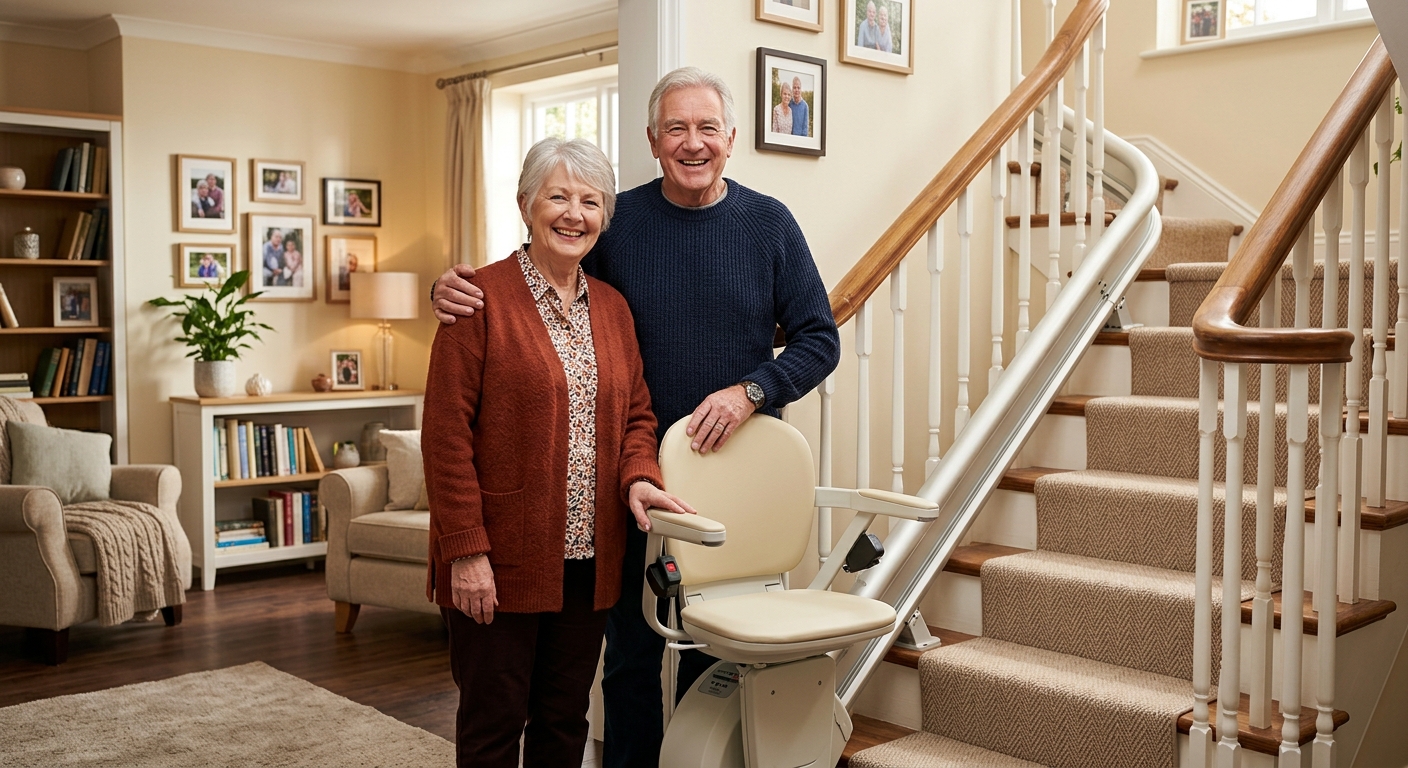
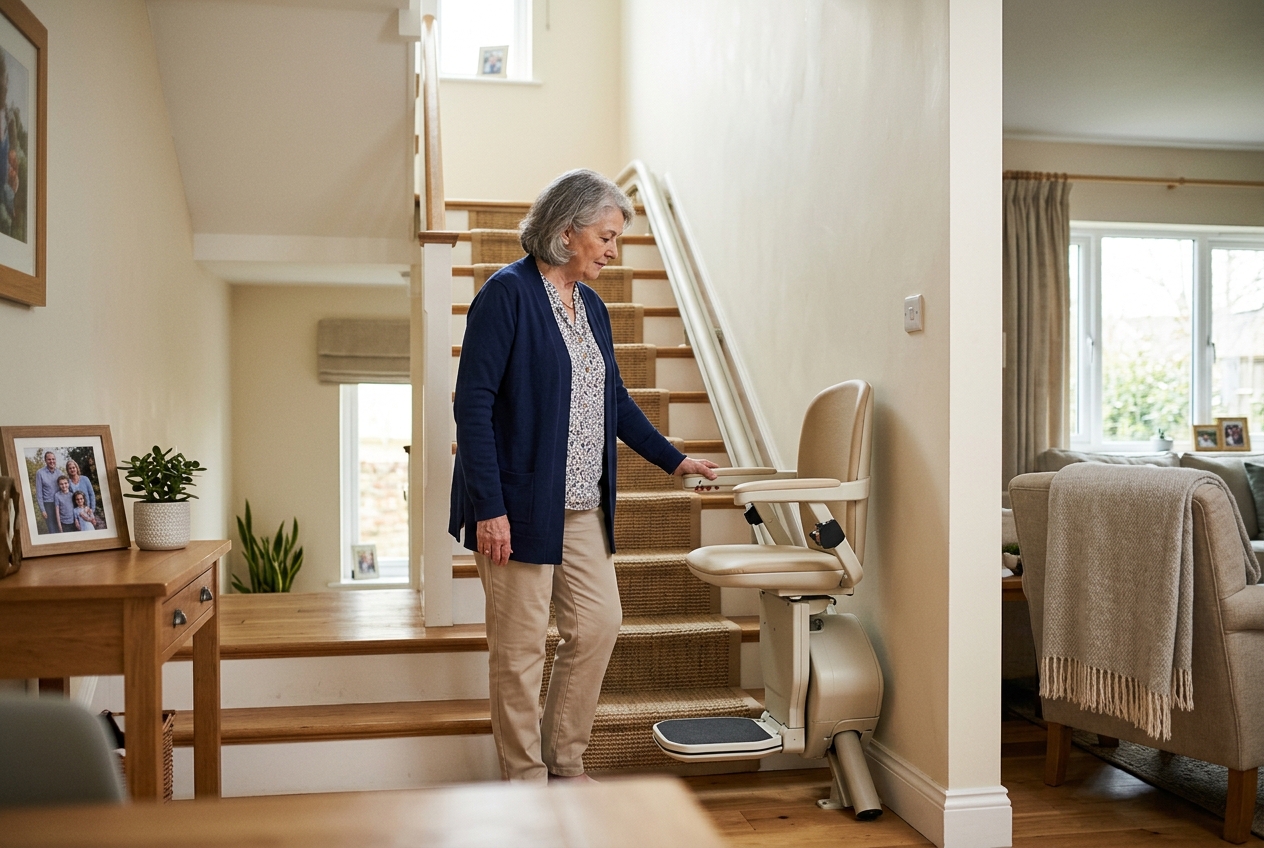
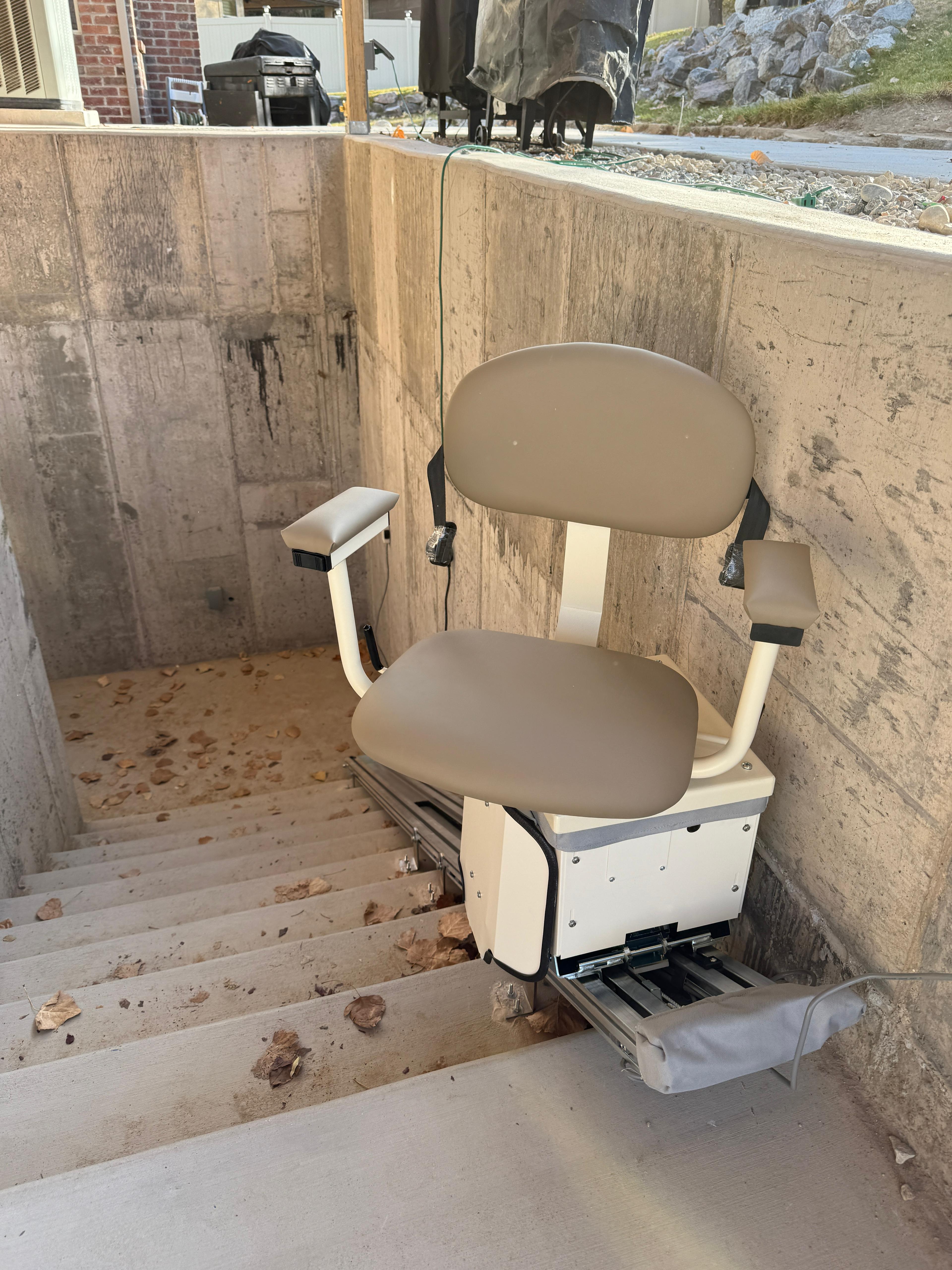
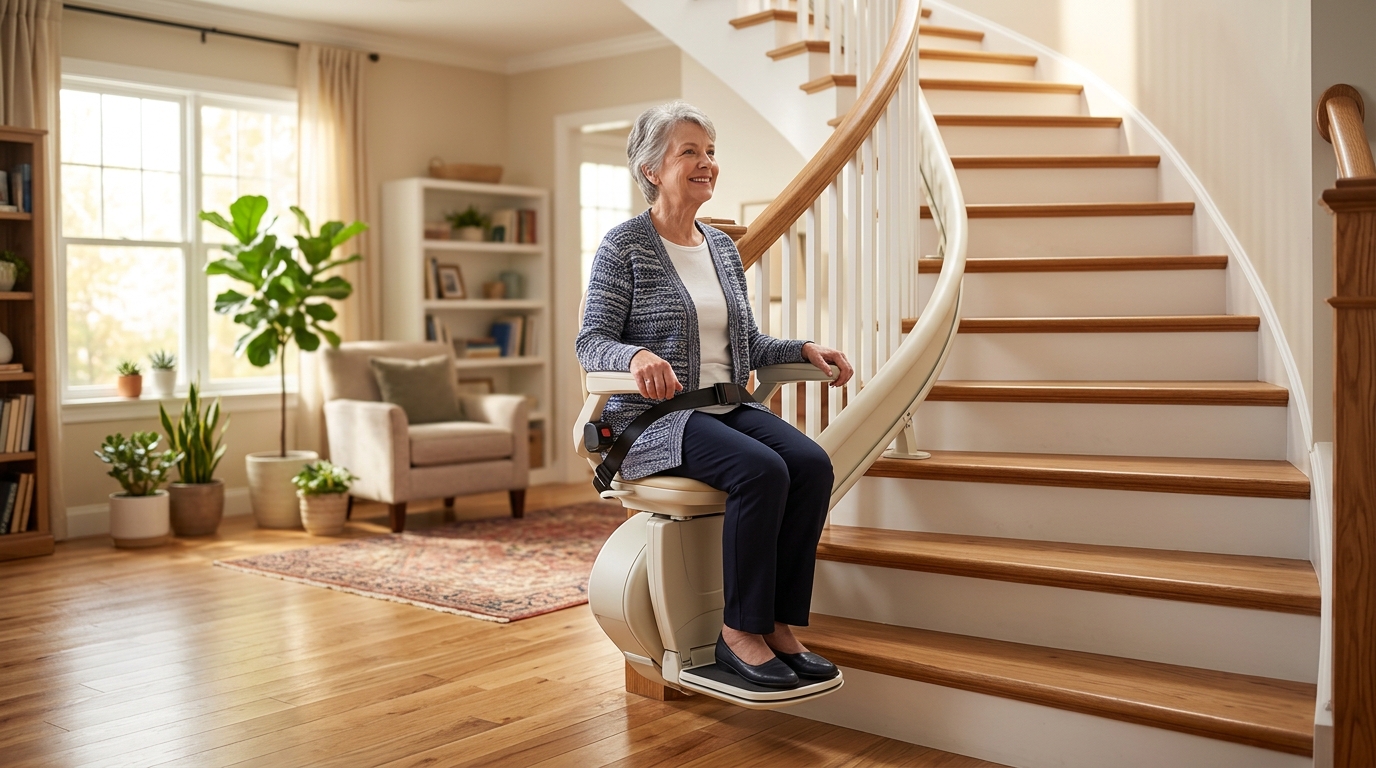
- 1Stairlifts — Motorized, chair-mounted systems that travel along a rail fixed directly to the staircase and allow individuals with mobility challenges to reach every level of their home safely and independently. They are used in homes with straight or curved indoor staircases, as well as on outdoor steps where weather-resistant models are available.
- 2Vertical Platform Lifts — Open-platform or enclosed lift systems that travel vertically along a mast or guide rail structure. This home mobility equipment is commonly installed at raised entryways, decks, porches, or between interior floor levels in both residential and commercial settings. Because users remain seated in their wheelchairs or scooters during travel, vertical platform lifts offer a practical and cost-effective alternative to traditional elevators for those who cannot step onto a stairlift seat.
- 3Modular Ramps — Pre-fabricated aluminum ramp sections assembled on-site to create a continuous, slip-resistant pathway from ground level to a raised threshold. They are installed at home entrances, back doors, decks, or any transition point that creates a barrier for wheelchair, walker, or scooter users. Modular ramps are ADA-compliant, fast to install, and can be reconfigured or relocated if your living situation or mobility needs change over time.
- 4Residential Elevators — Full-cabin lift systems built into the home's structure to provide enclosed vertical travel between two or more floors. This home mobility equipment is well-suited for households where a permanent, high-capacity solution is needed for wheelchairs, scooters, or multiple passengers at once. Beyond improving daily accessibility, a residential elevator adds long-term value to the property and can serve the household reliably for decades.
Assess Your Home Before You Choose
Your home's structure will directly influence which equipment is right for you. Straight staircases are the most straightforward to work with. Curved staircases, split-level layouts, and irregular step widths require custom solutions, which affect both cost and timeline. For stairlifts, staircase width matters. Most standard units fold to within 11 to 14 inches of the wall, but narrower staircases may limit your options. For ramps, the height of the threshold and the slope of the entry will determine what system configuration works best. If you are considering a vertical platform lift or residential elevator, available floor space and ceiling clearance will determine what models are feasible.
Questions to Ask Before Committing to Home Accessibility Modifications
Before signing with any provider, make sure you have clear answers to these five questions.
- What is the weight capacity? Capacity limits vary by model and type of mobility product. Choose a unit that comfortably exceeds the primary user's weight.
- Does it work during a power outage? Battery-powered stairlifts continue operating when the power goes out, which is important for reliable daily use.
- What does the warranty cover? Understand the difference between labor and parts coverage, and confirm who will service the equipment after it is installed.
- How long does installation take? Ask your provider for a schedule at the evaluation. Curved stairlifts and home elevators take longer than straight stairlifts.
- Are financial assistance programs available? When getting your evaluation, ask your provider whether a payment plan is available. It can make moving forward with the right solution much more manageable.
Choose a Provider Who Installs What They Sell
This detail matters more than many homeowners realize. When questions or issues come up after installation, you want one company that is accountable for the evaluation, the installation, and ongoing service. Working with a provider that stands behind the whole job gives you a single point of contact from start to finish.
Make Your Home Work for You with the Right Accessibility Equipment
Doing home modifications for seniors and individuals with mobility challenges is not just a practical upgrade. It is a commitment to independence, safety, and the ability to stay in the home you love for years. Taking the time to assess your needs, understand your options, and ask the right questions before installation will help you make a decision you are confident in.
Next Step
We offer and install different mobility solutions across Utah, Idaho, and Arizona. Contact us today to schedule your free evaluation and learn how the right equipment can help you move safely and comfortably throughout your home.
Schedule A Free Evaluation