Table of Contents
- The Short Version
- Where They Differ
- Installation and disruption
- Cost
- Space and layout
- Who is using it, and how
- Speed and daily rhythm
- Maintenance over the years
- Home Lift, Home Elevator, Through Floor Lift
- How to Decide
- Frequently Asked Questions
- Is a stair lift cheaper than an elevator?
- Can an elevator be added to an existing home?
- What is the difference between a home lift and a home elevator?
- Which is better for a wheelchair user?
- Does a stair lift work on a curved staircase?
- Can a stair lift be removed later?
- Will either one add value to my home?
- The Bottom Line
A stair lift and a home elevator solve the same problem in completely different ways, and the right answer usually has less to do with budget than people expect. It has to do with the house, and with who is using it.
Here is how the two compare on the things that actually decide it, and a straightforward way to work out which one your home is asking for.
The Short Version
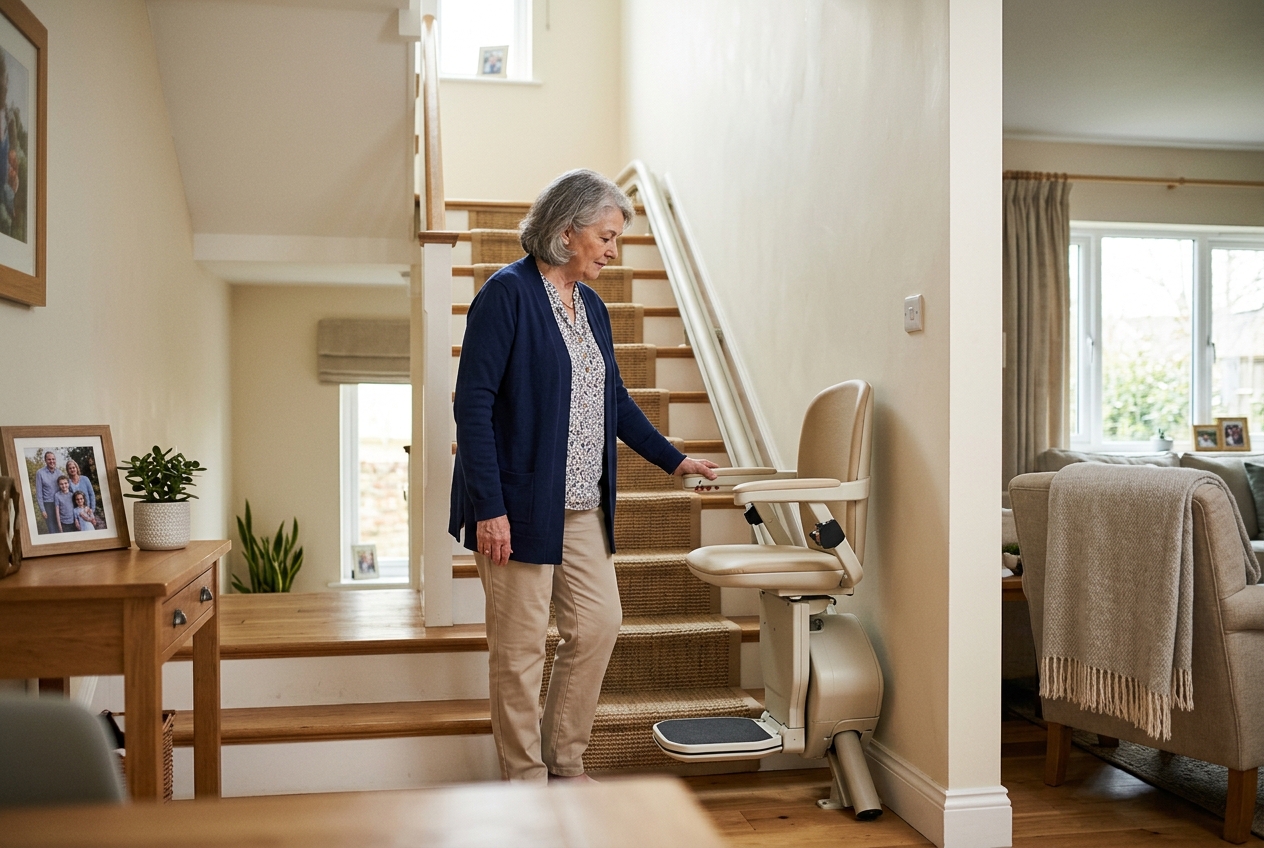
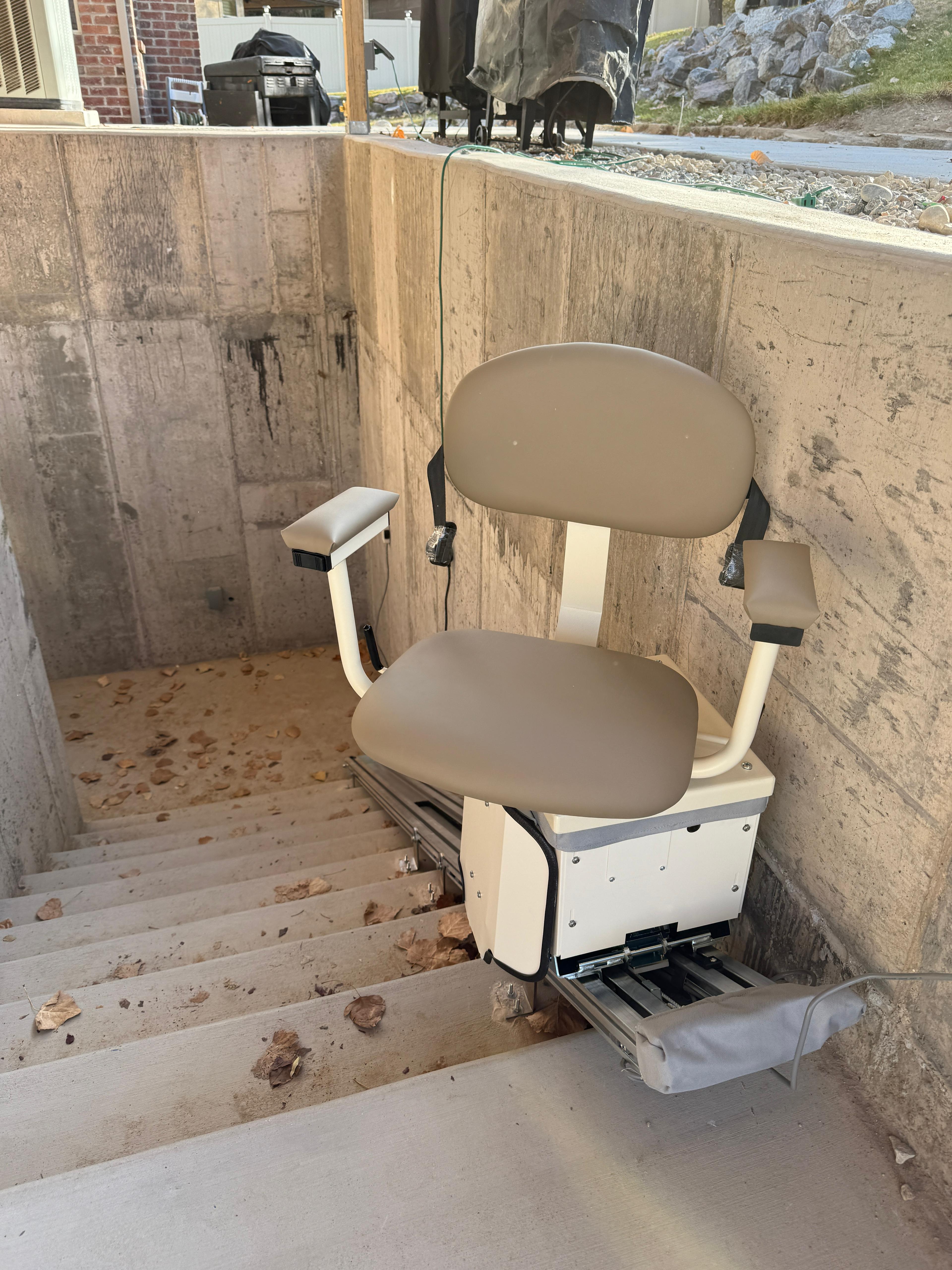
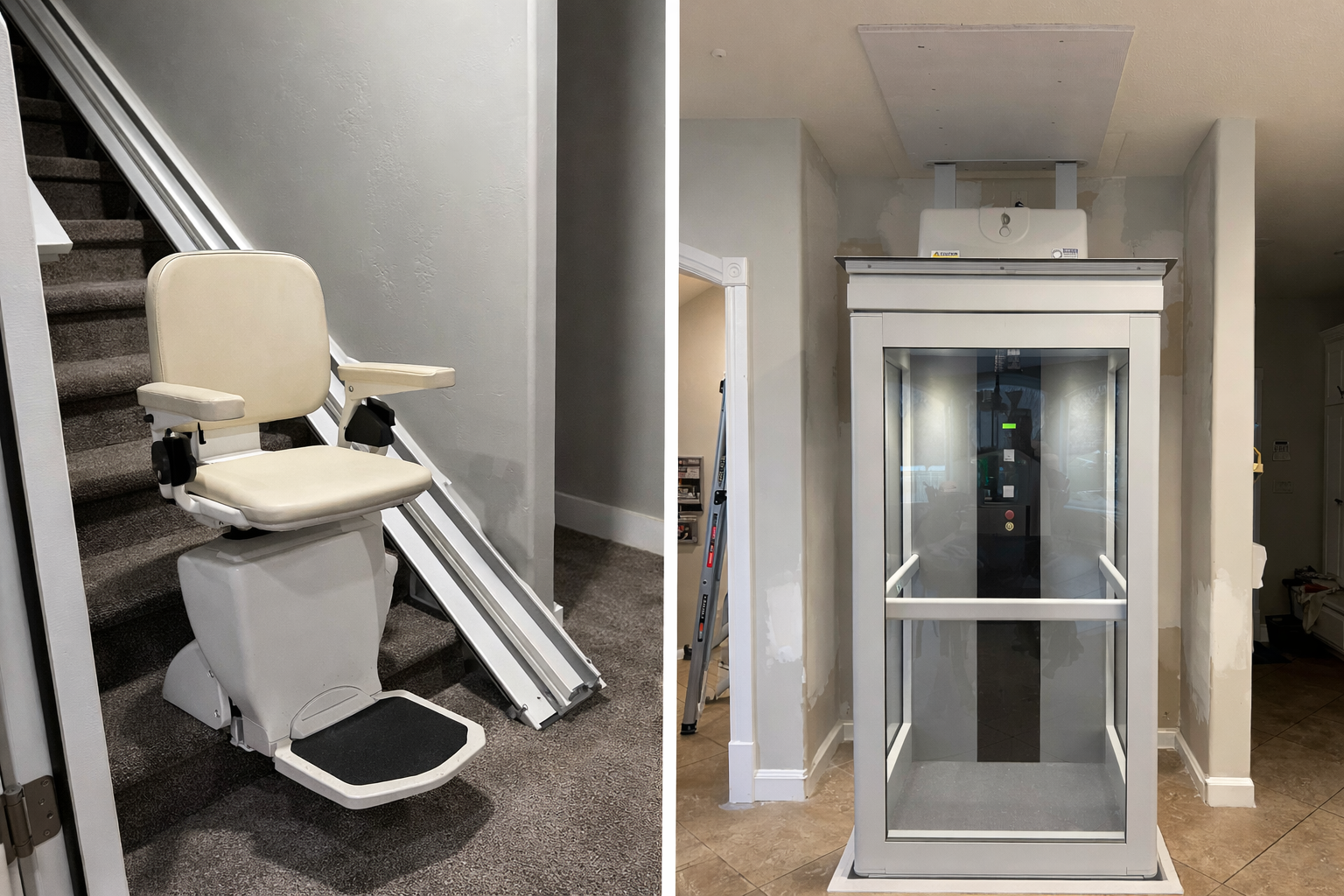
A stair lift is a seat that travels a rail fixed to your staircase. It carries one seated person at a time. It attaches to the stair treads rather than the structure of the house, so it goes in fast and comes out without a trace.
A home elevator, sometimes called a home lift or a residential elevator, is an enclosed car that travels between floors. It carries a wheelchair, more than one person, or a person plus their laundry basket. It becomes part of the building.
If the person using it can transfer to a seat and walk a few steps at each end, a stair lift is almost always the better buy. If they cannot, or will not be able to before long, that single fact decides it and the rest of this article is detail.
Where They Differ
Installation and disruption
A stair lift mounts to the staircase itself. Walls, ceilings and floors stay untouched, and there is no structural work and no permit conversation. Most installs are finished in a day or two, and the house is back to normal the same evening.
A home elevator is a building project. It needs a shaft or a hoistway, a landing at each floor, somewhere for the drive equipment, and it has to be planned around your layout and your structure. Realistically you are looking at four to six weeks from order to a finished, working elevator, and part of your house is a work site during that window.
That gap matters more than the price gap for a lot of households. If access is needed in a fortnight because somebody is coming home from hospital, a stair lift is the only one of the two that can actually answer.
Cost
Understanding the stair lift versus home elevator cost difference is usually where planning starts. Stair lifts are the more affordable choice, with most units ranging from $4,000 to $20,000 depending on track complexity and optional features. A straight staircase sits at the bottom of that range. A curved staircase needs a rail built to the exact geometry of your stairs, which is what moves it up.
Residential elevators typically run $20,000 to $50,000, with luxury or multi floor units exceeding $75,000.
Those are different orders of magnitude, but they are not quite like for like. A stair lift is a piece of equipment. An elevator is a home improvement that stays with the property and tends to be read as an asset by a future buyer, particularly in a market with a lot of multi level housing. We go into the elevator side in more detail in what you need to know about the cost and installation of home elevators, and the stair lift side in how much does a stairlift cost.
Space and layout
This is where houses in our part of the world make the decision for you more often than people realise.
A stair lift needs the width of your staircase and nothing else. It does not take a room, it does not need a cupboard sacrificed, and on a narrow staircase the seat and footrest fold up when the lift is not in use. Even a curved staircase with a half landing can be fitted with a custom rail.
An elevator needs a footprint on every floor it serves, stacked vertically, in roughly the same position. In a lot of homes that space simply does not exist without giving up a closet or part of a room on each level. Split level homes, which are everywhere across the Wasatch Front, are particularly awkward for elevators and particularly well suited to stair lifts, because the half flights are short and a rail handles them easily.
The practical test is to stand in your house and find a stack of space that works on every floor. If you cannot picture it, you have your answer.
Who is using it, and how
A stair lift carries one seated person. They have to be able to get on, sit, and get off at the other end, which means transferring from a wheelchair at both ends if they use one.
An elevator carries the wheelchair itself, with the person in it. It also carries two people, a walker, a laundry basket, groceries, a suitcase. For a household where someone uses a wheelchair full time, that difference is not a convenience, it is the whole point.
Speed and daily rhythm
Stair lifts move at roughly 9 to 20 feet per minute. That is deliberately unhurried, and for most people making a handful of trips a day it is completely fine.
An elevator is faster, and it is faster in a way that compounds in a busy house. If three people are using it, or it is being used a dozen times a day, or someone is carrying things up and down constantly, the difference stops being about the ride and starts being about whether the thing is a bottleneck.
Maintenance over the years
A stair lift wants an annual service, battery checks and a clear track. Look after one and ten to fifteen years of reliable use is a reasonable expectation. Batteries are a wear item and get replaced along the way.
An elevator has motors, cables, controls and safety systems, and it needs regular professional inspection. The upkeep is more involved and more expensive. In return, a well maintained residential elevator lasts decades, which changes the arithmetic if you intend to stay in the house indefinitely.
Home Lift, Home Elevator, Through Floor Lift
The vocabulary trips people up, so it is worth untangling.
Home lift and home elevator usually mean the same thing in everyday use: an enclosed car travelling between floors inside a house.
A shaftless or through floor lift is a particular kind of home elevator that passes through an opening cut in the floor rather than running in a built shaft. It is less invasive than a traditional elevator and typically serves two floors rather than several, which puts it between a stair lift and a full elevator on both cost and disruption. If a conventional elevator will not fit your house, this is the option worth asking about.
Stair lift, stairlift and chair lift all describe the same product. There is no difference, only spelling.
We break the elevator options down further in the different types of home elevators.
How to Decide
Work through these in order and most households land on an answer quickly.
Choose a stair lift if the person using it can transfer to a seat, you need access soon, your staircase is the only route that matters, you would rather not do building work, or the home is one you may not stay in forever. A stair lift can be removed later and leaves the staircase as it was.
Choose a home elevator if a wheelchair needs to travel between floors, more than one person will use it regularly, you need to move things as well as people, the house has three or more levels worth connecting, or this is the home you intend to grow old in and you would rather do it once.
Look at a shaftless or through floor lift if you want elevator style access but a conventional shaft will not fit, or you only need two floors connected.
If you are weighing an elevator against a stair lift mainly on price, be honest about the wheelchair question first. It is the one factor that cannot be worked around, and it decides the outcome more often than the budget does.
Frequently Asked Questions
Is a stair lift cheaper than an elevator?
Considerably. Stair lifts generally run $4,000 to $20,000 depending on whether your staircase is straight or curved, while residential elevators typically start around $20,000 and climb from there. The install timelines differ just as sharply, with a stair lift taking a day or two against four to six weeks for an elevator.
Can an elevator be added to an existing home?
Often, yes. Retrofitting an elevator into a house that was not built for one is routine work, but it depends on finding a usable stack of space on every floor it serves and on what your structure allows. Shaftless and through floor lifts exist precisely for homes where a conventional shaft is not practical. The only way to know is to have someone look at the actual layout.
What is the difference between a home lift and a home elevator?
In normal use, nothing. Both describe an enclosed car moving between floors in a house. The terms are used interchangeably by manufacturers and homeowners alike.
Which is better for a wheelchair user?
An elevator, clearly. A stair lift carries a seated person, which means transferring out of the chair at the bottom and into another one at the top. An elevator carries the chair with the person in it. If a wheelchair needs to move between floors, that settles it.
Does a stair lift work on a curved staircase?
Yes. A curved stair lift uses a rail built to the specific geometry of your stairs, including bends, turns and intermediate landings. It costs more than a straight rail because the rail is made for your house, but the staircase itself does not need altering. See curved stairlifts for how that works.
Can a stair lift be removed later?
Yes, and that is one of its genuine advantages. The rail fixes to the stair treads rather than the walls or structure, so removal leaves the staircase essentially as it was. An elevator is a permanent change to the building.
Will either one add value to my home?
An elevator is the one more likely to read as an improvement to a future buyer, since it stays with the property and broadens who the house suits. A stair lift is equipment rather than a fixture, and is usually valued as such.
The Bottom Line
Start with the person, not the price. If they can transfer to a seat, a stair lift does the job for a fraction of the cost, goes in within a day or two, and comes out again cleanly if circumstances change. If a wheelchair has to travel between floors, or several people will use it daily, a home elevator is worth the project it takes to install.
Everything else, budget, layout, resale, follows from that first question rather than leading it.
Next Step
We specialize in helping homeowners find the perfect accessibility option tailored to their needs, home layout, and lifestyle. Our team provides expert guidance, professional installation, and ongoing support to ensure you can move confidently between floors every day. Contact us today for a free in-home assessment.
Schedule A Free Evaluation