Table of Contents
- Key Takeaways
- What a Vertical Platform Lift Actually Is
- Mini Vista or Nano: Which One Fits
- Who Self-Install Makes Sense For
- Who Should Consider Professional Install Instead
- How the Installation Actually Works
- If You're Still Deciding
- Frequently Asked Questions
- Can I really install a vertical platform lift myself?
- What's the difference between the Mini Vista and the Nano?
- Do I need a permit to install one myself?
- Will I need to do any electrical work?
- How long does delivery take?
Yes, you can install a vertical platform lift yourself, and for a porch, deck, garage, or similar low-rise entry, it's often a straightforward project. Here's what's actually involved, and which of our two self-install options fits your situation.
Key Takeaways
- A vertical platform lift (VPL) moves a wheelchair or scooter straight up and down, with no transfer needed and no ramp required
- Self-install VPLs run on standard household power, so no electrical work is involved
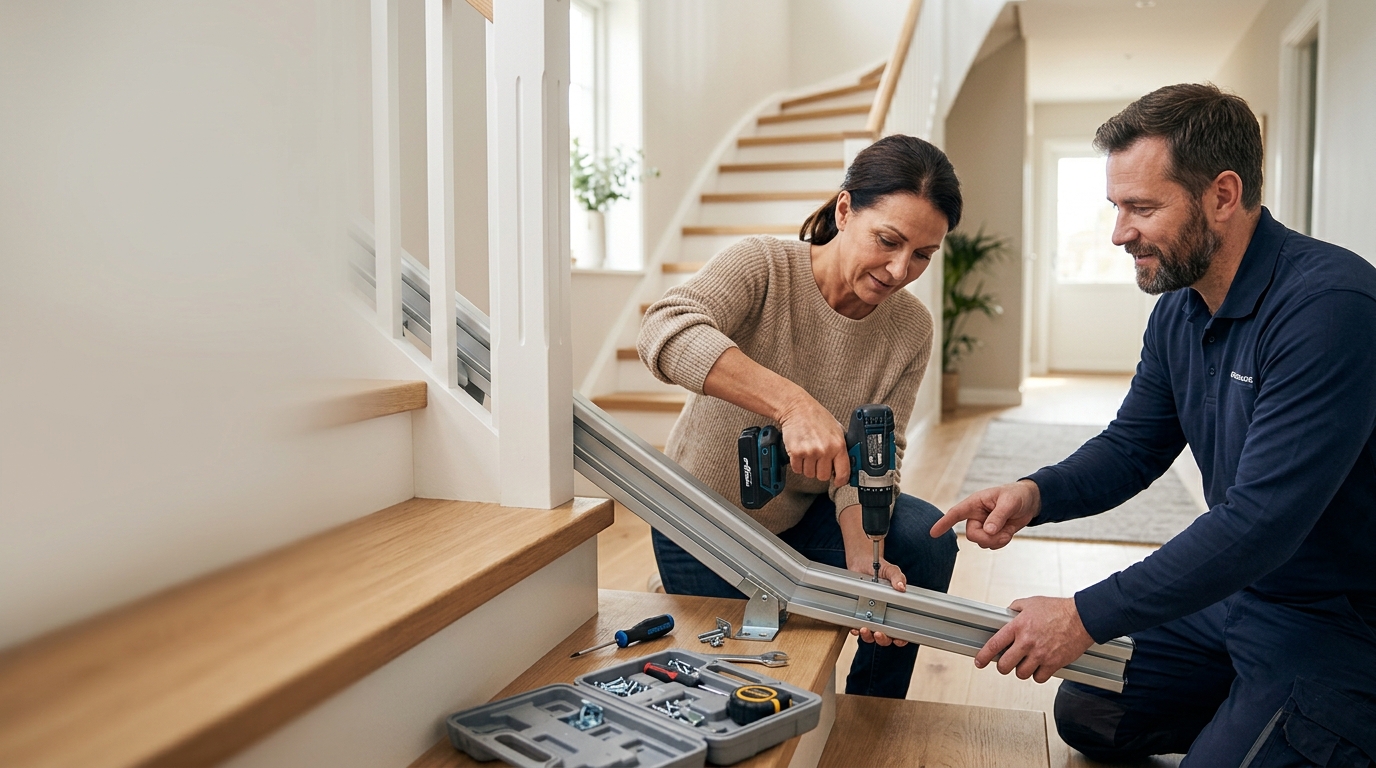
- Most installations take a day or two with basic hand tools
- The Atlas Mini Vista handles rises up to 30 inches, starting at $3,950
- The Atlas Nano handles rises up to 64 inches, starting at $3,995, with a 750 lb capacity
- Professional installation is also available across Utah, Idaho, and Arizona
What a Vertical Platform Lift Actually Is
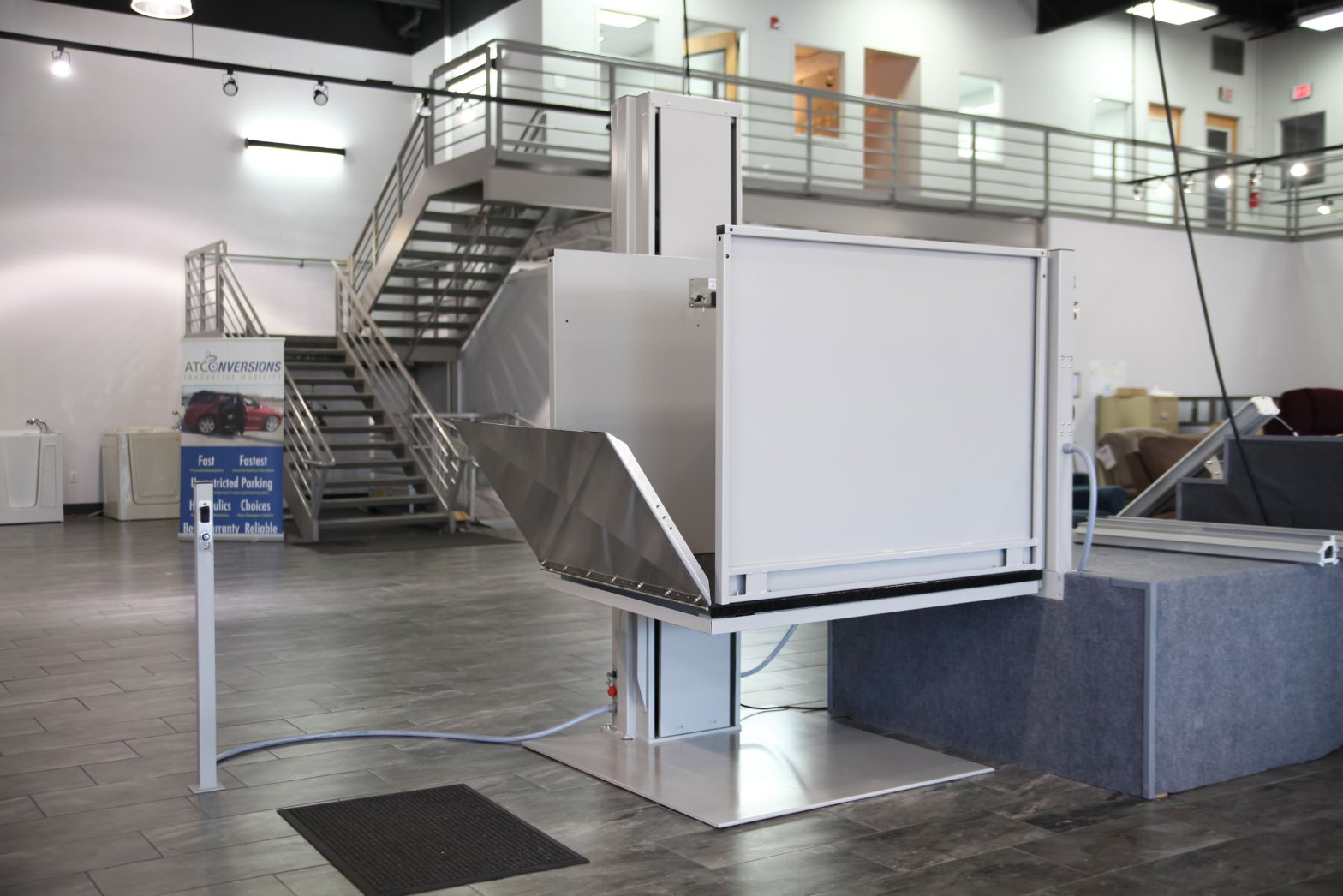
A vertical platform lift, or VPL, is a motorized platform that moves straight up and down, functioning like a small open-air elevator for short residential rises. Unlike a ramp, it requires no horizontal floor space. Unlike a stairlift, it carries the entire wheelchair or scooter without requiring a transfer to a seat.
Both the Atlas Mini Vista and Atlas Nano ship as pre-assembled units. Our team calls to confirm your measurements before your order ships, so what arrives is already built for your rise height and layout.
Mini Vista or Nano: Which One Fits
The two self-install VPLs we offer are built for different rise heights.
The Mini Vista is the compact, entry-level option, built for rises up to 30 inches, the kind of height you'd see on a porch step, low deck, or garage entry. It starts at $3,950 and carries up to 750 lbs.
The Nano handles more, up to 64 inches of rise, with a slimmer tower footprint (20" × 13.5") and galvanized steel construction for outdoor use. It starts at $3,995 and carries up to 750 lbs. The Nano gives you substantially more travel height without moving up to a full residential elevator.
As a rule of thumb, a ramp needs roughly one foot of horizontal run for every inch of rise. For a 64-inch rise, that's over 60 feet of ramp, space most properties simply don't have. A VPL solves that in a fraction of the footprint.
| Mini Vista | Nano | |
|---|---|---|
| Rise height | Up to 30" | Up to 64" |
| Starting price | $3,950 | $3,995 |
| Weight capacity | 750 lbs | 750 lbs |
| Tower footprint | Compact entry-level | 20" × 13.5", slim tower |
| Best for | Porch steps, low decks, garage entries | Taller elevations, decks, garages, outdoor use |
Who Self-Install Makes Sense For
Self-install tends to be the right fit if:
- You have a porch, deck, garage, or similar low-rise entry point
- You're comfortable with basic hand tools, or have someone who is
- Your rise height falls within 30 inches (Mini Vista) or 64 inches (Nano)
- You'd rather not wait for a scheduled install appointment
Who Should Consider Professional Install Instead
Professional installation is usually the better choice if:
- Your rise height, site layout, or power access is more complex than a standard install
- You'd rather not handle any part of the physical setup
- You want a technician to test everything and walk you through use and safety in person
If you're not sure which category you fall into, a quick call before you order can save a headache either way.
How the Installation Actually Works
Once your Mini Vista or Nano arrives, here's what installation looks like, start to finish:
- 1Confirm your assessment call details. Before your order ships, our team calls to review rise height, platform placement, power access, and gate configuration, so what arrives is already built for your site.
- 2Unbox and lay out the components. The platform, tower sections, and hardware arrive pre-assembled where possible, along with full instructions and video guides.
- 3Position and secure the tower. The tower is set in place and anchored to a stable surface at the base of your rise, deck, porch, or garage entry.
- 4Attach the platform. The platform connects to the tower and is leveled and secured according to the included instructions.
- 5Connect to standard power. Both units plug into a 120V outlet near the tower, so no electrical work or special wiring is required.
- 6Run the safety checklist. Test the obstruction sensors, emergency stop, and call stations, if included, before regular use.
Most homeowners complete this in a day or two with a second person to help position the tower and platform. In most jurisdictions, lifts under 30 inches of rise, like the Mini Vista, fall outside residential permit requirements, though it's worth confirming with your local building department before installing. Our team is a phone call away if a question comes up mid-install.
If You're Still Deciding
Self-install works well when your rise height and site layout are a clean match for the Mini Vista or Nano. If your situation is more complex, or you'd simply rather have someone else handle it, we install both units, along with the full range of vertical platform lifts, professionally across Utah, Idaho, and Arizona.
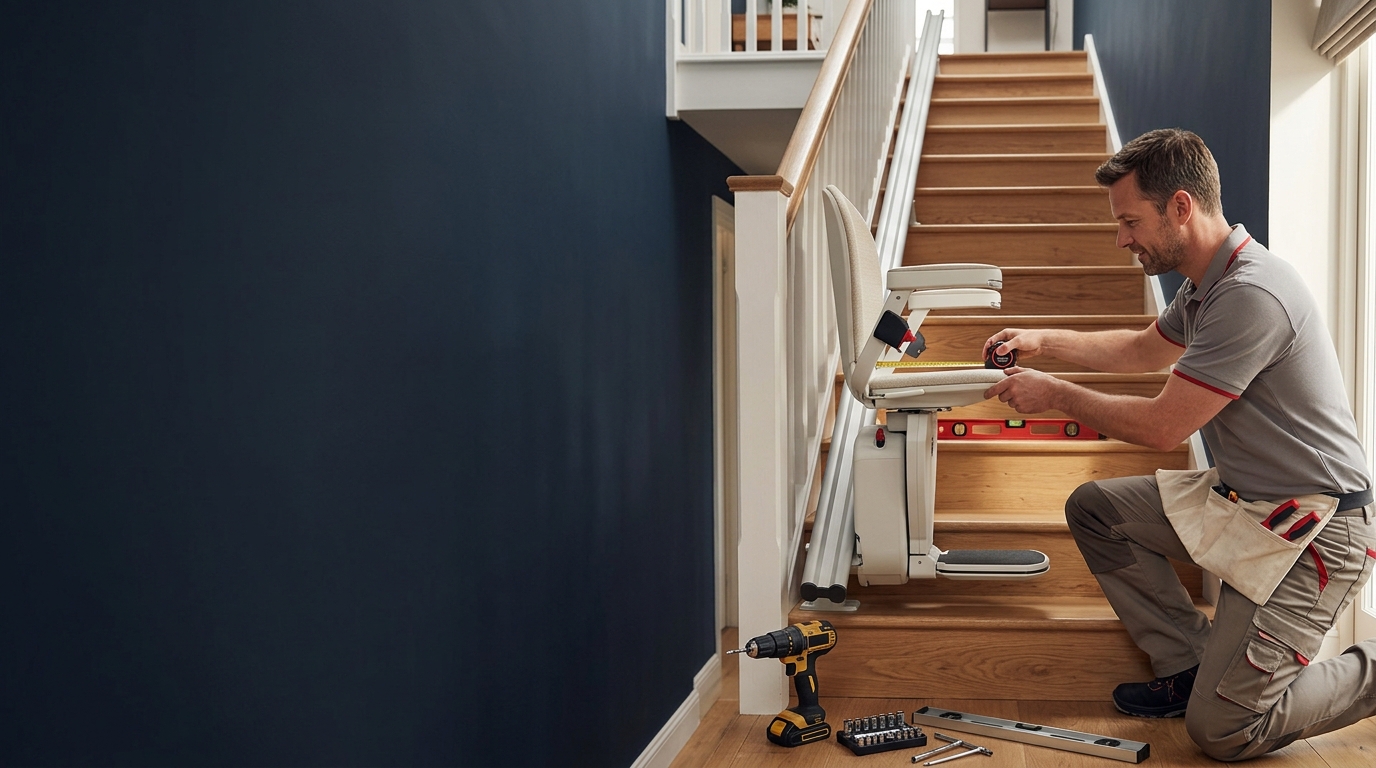
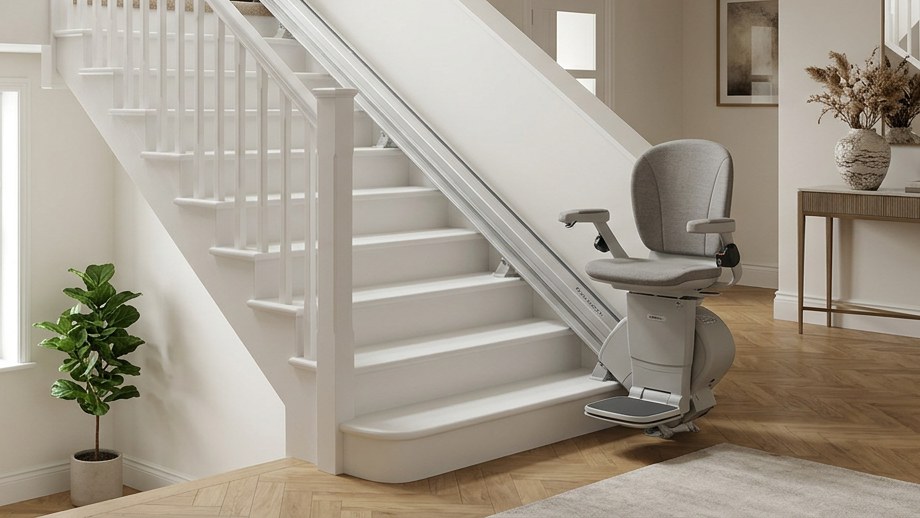
If your staircase is a straight run and a seated lift makes more sense than a standing platform, a self-install stairlift may be a better fit.
Next Step
Configure your Mini Vista or Nano, schedule a free evaluation, or call 801-386-2408 with questions.
Schedule A Free EvaluationFrequently Asked Questions
Can I really install a vertical platform lift myself?
Yes. Both the Mini Vista and Nano are designed for self-installation, ship pre-assembled, and typically take a day or two to set up with basic hand tools.
What's the difference between the Mini Vista and the Nano?
The Mini Vista handles rises up to 30 inches and starts at $3,950. The Nano handles rises up to 64 inches, carries up to 750 lbs, has a slimmer tower, and starts at $3,995.
Do I need a permit to install one myself?
In most cases, no, for lifts under 30 inches of rise. We recommend confirming with your local building department before installation to be sure.
Will I need to do any electrical work?
No. Both units run on standard household power.
How long does delivery take?
Orders typically arrive within 7 to 10 business days from the date your order is confirmed, shipped via freight carrier who will coordinate a delivery window with you directly.