Table of Contents
- Why Medicare Treats a Stairlift as a Home Modification
- What Original Medicare Does Cover
- The One Medicare Route Worth Checking
- Why Medigap Does Not Change the Answer
- Medicaid Waivers Are Often the Larger Source
- Veterans Benefits
- Three Smaller Routes People Miss
- How to Find Out What You Actually Qualify For
- Frequently Asked Questions
- Does Medicare pay for a stair lift?
- Will a doctor's prescription make Medicare cover a stairlift?
- Does Medicare cover stairlift installation?
- Does Medicaid cover stairlifts?
- Can veterans get help paying for a stairlift?
- Does Medigap help with a stairlift?
- Is a stairlift tax deductible?
- What does a stairlift cost if nothing covers it?
- The Bottom Line
Original Medicare does not pay for a stairlift. That is the short answer, and it is worth knowing early, because a great many families spend weeks chasing a benefit that was never going to be there.
The longer answer is more useful. Several other programs do help, and a few of them cover a stairlift in full for people who qualify. This guide explains why Original Medicare excludes stairlifts, which part of Medicare is still worth a phone call, and the four other funding routes that are more likely to produce actual money. Western Stairlifts was founded in 1996 and installs stairlifts across Utah, Idaho and Arizona, and this question comes up on nearly every first call we take.
The sentence to take away: Original Medicare treats a stairlift as a home modification rather than medical equipment, so it does not cover one, while Medicaid waiver programs and veterans grants frequently do.
Why Medicare Treats a Stairlift as a Home Modification
Original Medicare, meaning Part A and Part B, pays for durable medical equipment under a specific definition. To qualify as durable medical equipment, an item has to be durable enough for repeated use, expected to last at least three years, used in the home, generally only useful to someone who is ill or injured, and prescribed by a doctor for a medical purpose.
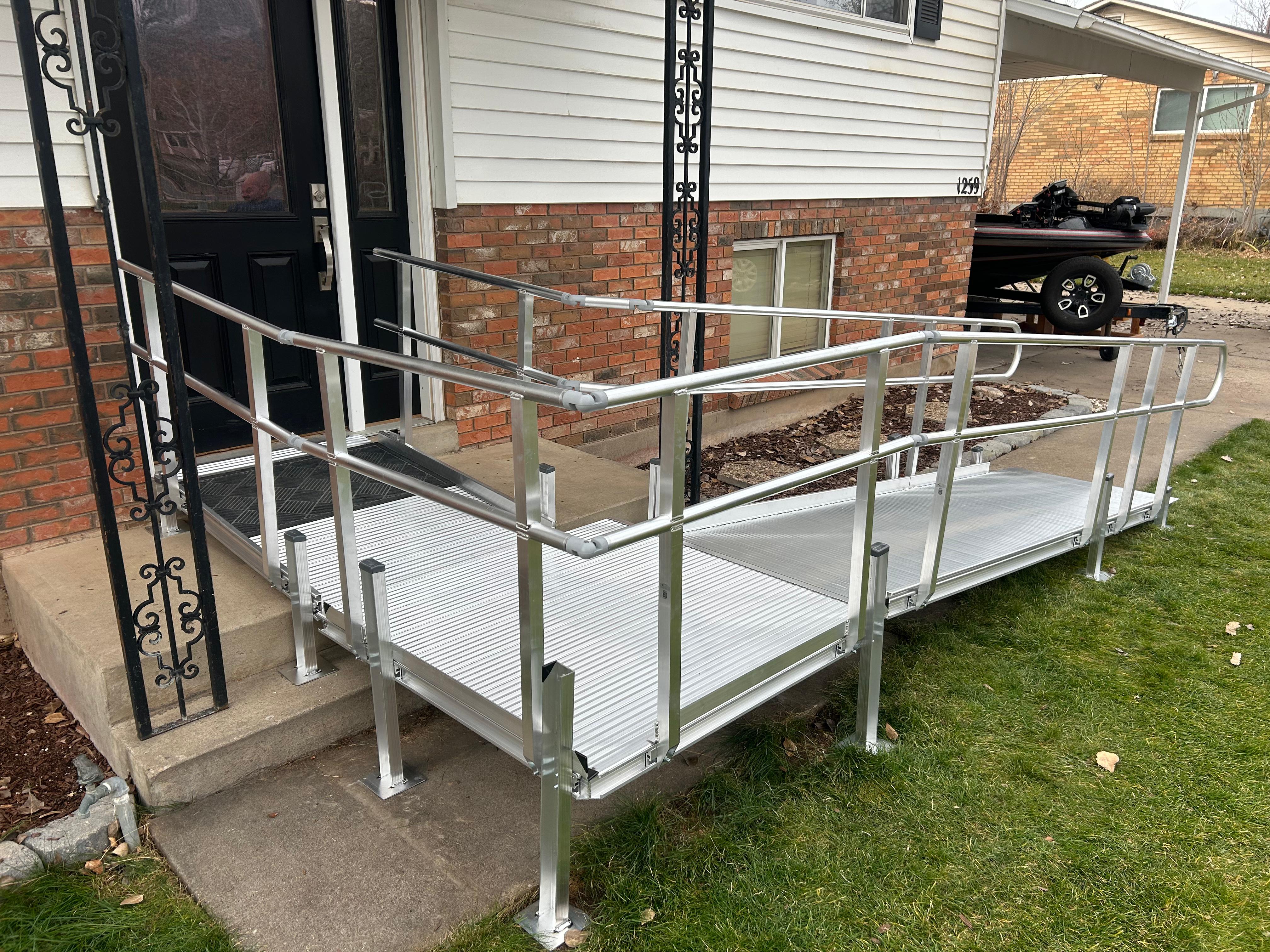
A stairlift fails that test on one point in particular. It is fixed to the staircase. Medicare draws a line between equipment that comes into a home and equipment that becomes part of one, and anything requiring permanent installation falls on the wrong side of it. Wheelchair ramps, grab bars and widened doorways are excluded for the same reason.
This is not a grey area or a question of how the claim is worded. Medicare's own published guidance on durable medical equipment specifically excludes stair lifts and items that require home modification. A doctor's letter confirming medical necessity does not change the category.
What Original Medicare Does Cover
It is worth knowing where the line actually falls, because some of what people need alongside a stairlift is covered.
Original Medicare Part B does pay for durable medical equipment that meets the definition above, including wheelchairs, walkers, rollators, hospital beds and patient lifts used for transferring between a bed and a chair. After the Part B deductible, Medicare generally pays 80 percent of the approved amount and the beneficiary pays the remaining 20 percent, provided the supplier is enrolled in Medicare and accepts assignment.
So a walker is covered and the stairlift is not, even though both help the same person move around the same house. The distinction is about the equipment, not the need.
The One Medicare Route Worth Checking
Medicare Advantage, also called Part C, is run by private insurers rather than by Medicare directly, and those insurers are permitted to offer supplemental benefits that Original Medicare does not include. Some plans now offer a home safety or environmental modification benefit that can be put toward a stairlift.
Two honest caveats. This is not common, and where it does exist it is usually a partial contribution rather than full cover. Treat it as money worth finding rather than money to count on.
If the person using the lift is on a Medicare Advantage plan, it costs one phone call to find out. Call the member services number on the back of the card and ask a specific question rather than a general one: does my plan include a supplemental home modification benefit, a home safety benefit, or an environmental modification benefit? If it does, does it apply to a stair lift, and what is the pre-authorization process?
General questions about Medicare get general answers. Only the plan's own member services can tell you what that plan covers.
Why Medigap Does Not Change the Answer
Medigap, or Medicare Supplement, is frequently misunderstood here. A Medigap policy helps with the share of cost that Original Medicare leaves to the beneficiary, such as that 20 percent coinsurance on durable medical equipment.
It only applies to things Original Medicare already covers. Because Original Medicare does not cover a stairlift at all, there is no share of cost for Medigap to pick up. A Medigap plan will not help toward a stairlift, however comprehensive it is.
Medicaid Waivers Are Often the Larger Source
This is the route most people have never heard of, and it is frequently worth far more than anything on the Medicare side.
Most states run Home and Community-Based Services waiver programs through Medicaid. The purpose of these programs is to keep people living at home rather than moving into a nursing facility, which is both better for the person and considerably cheaper for the state. Home modifications that make staying at home possible, including stairlifts, are within scope for many of these waivers.
Three things decide it. Coverage varies substantially from state to state, so Utah, Idaho and Arizona each have their own programs and their own rules. The person generally needs to be Medicaid eligible. And the stairlift usually has to be shown as essential to remaining safely at home rather than as a convenience.
Where a waiver does apply, it can cover the full cost. Start with your state Medicaid office or your local Area Agency on Aging, and ask about home modification benefits under the Home and Community-Based Services waiver.
Veterans Benefits
Veterans have the clearest path of anyone, and it is routinely underused.
The Home Improvements and Structural Alterations grant, usually shortened to HISA, pays for medically necessary home modifications and stairlifts fall within what it covers. There are separate maximums for service-connected and non-service-connected disabilities, and those figures are set by the Department of Veterans Affairs rather than by us, so check the current amounts on VA.gov or with a VA social worker.
Two larger grants, Specially Adapted Housing and Special Home Adaptation, exist for veterans with particular service-connected disabilities and can fund much more substantial work.
We covered the veterans side in more detail in the disabled veterans accessibility post.
Three Smaller Routes People Miss
None of these is a grant, but each reduces the real cost and all three are commonly overlooked.
The medical expense tax deduction. A home modification installed for a documented medical reason may qualify as a deductible medical expense. The deductible portion is generally the amount by which the cost exceeds any increase in the property's value, and medical expenses are only deductible above a percentage of income. This one genuinely depends on your circumstances, so ask a tax professional rather than assuming either way.
The Utah sales tax exemption. In Utah, a stairlift installed for a medical need is not subject to sales tax. On a purchase of this size that is a real saving and it applies automatically rather than requiring an application.
State assistive technology programs. Every state runs one. They vary, but low-interest loan programs and equipment reuse schemes are common, and a reconditioned unit obtained this way can cost a fraction of a new one.
How to Find Out What You Actually Qualify For
Work through these in order. The sequence matters, because the first question changes which of the rest apply.
- 1Establish which Medicare the person actually has. Original Medicare and Medicare Advantage look similar on a card and behave completely differently here. If it is Advantage, make the member services call described above.
- 2Check Medicaid eligibility, even if you assume the answer is no. Eligibility rules for waiver programs are not the same as for standard Medicaid, and people are often eligible for one and not the other.
- 3Ask about veteran status, including a spouse's. Families frequently do not think of it, and HISA is the most straightforward of all these routes.
- 4Talk to a tax professional before the installation, not after. Documentation gathered at the time is far easier than documentation reconstructed a year later.
- 5Ask the supplier what a reconditioned unit would cost. A reconditioned stairlift with a warranty is often the difference between affordable and not, and it closes the gap that a partial benefit leaves behind.
Frequently Asked Questions
Does Medicare pay for a stair lift?
No. Original Medicare, Parts A and B, does not cover stairlifts, because they are classified as home modifications rather than durable medical equipment. Some Medicare Advantage plans offer a supplemental home modification benefit that may contribute toward one, so that is worth checking with the plan directly.
Will a doctor's prescription make Medicare cover a stairlift?
No. A prescription or a letter of medical necessity does not change how Medicare classifies the equipment. The exclusion is about the category, not about whether the need is genuine.
Does Medicare cover stairlift installation?
No. Because the stairlift itself is not covered, the installation is not covered either. Both are treated as part of a home modification project.
Does Medicaid cover stairlifts?
Often, through Home and Community-Based Services waiver programs, though coverage varies by state and the person generally needs to be Medicaid eligible. The stairlift usually has to be shown as essential to staying safely at home. Where a waiver applies, it can cover the full cost.
Can veterans get help paying for a stairlift?
Yes. The HISA grant covers medically necessary home modifications including stairlifts, with maximums set by the Department of Veterans Affairs. Larger grants exist for veterans with certain service-connected disabilities. Check current figures on VA.gov.
Does Medigap help with a stairlift?
No. Medigap only helps with costs that Original Medicare already covers, and Original Medicare does not cover stairlifts at all, so there is nothing for it to supplement.
Is a stairlift tax deductible?
Possibly. A modification installed for a documented medical reason may qualify as a medical expense, usually limited to the amount by which the cost exceeds any increase in your property's value. It depends on your situation, so take advice from a tax professional.
What does a stairlift cost if nothing covers it?
That depends on whether your staircase is straight or curved, and on whether a reconditioned unit suits you. We set out the ranges in the stairlift cost post.
The Bottom Line
Original Medicare will not pay for a stairlift and no amount of paperwork will change that, because the exclusion is about how the equipment is classified rather than about how badly it is needed.
What is worth your time instead: find out whether the person is on Medicare Advantage and make one call to member services, check Medicaid waiver eligibility properly rather than assuming, and ask about veteran status including a spouse's. Those three between them account for nearly all the funding that actually reaches people in Utah, Idaho and Arizona.
If you would like someone to look at your stairs and talk through what the options would cost before you start chasing benefits, book a free in home evaluation and we will walk it with you.