
Table of Contents
- Why aging in place matters more in 2026
- What belongs on an aging-in-place checklist
- The complete aging-in-place checklist
- Entryways and thresholds
- Stairs and staircases
- Bathrooms
- Bedrooms
- Kitchens
- Living areas and hallways
- Lighting and flooring
- Emergency response and smart-home basics
- Outdoor access (Utah snow, ice, and ramps)
- Mobility equipment that supports aging in place
- The Utah and Idaho reality
- When to DIY and when to call a pro
- Common mistakes to avoid
- Next steps
- Frequently asked questions
Aging in place means staying safely and comfortably in your own home as you get older, instead of moving to assisted living. For most families in Utah and Idaho, it is possible, with the right changes made room by room, before a crisis forces the decision.
Maybe you are reading this the morning after a fall, checking whether the house itself was part of the problem. Maybe you are planning ahead, thinking about the stairs in your rambler or the tub you have used for thirty years and wondering how much longer it will work for you. Either way, this checklist is for you and your family.
We put this together after two decades of walking through Utah and Idaho homes: split levels in Sandy, ramblers in Boise, basement apartments across Salt Lake City's suburbs. Below is a room-by-room plan, plus the equipment and the professional advice that make each step realistic instead of overwhelming.
Why aging in place matters more in 2026
Interest in aging in place spikes every winter, according to Google Trends, which tracks relative search interest over time. That pattern tracks with real life: a slip on an icy step, a hard fall over the holidays, or a hospital stay right before a family gathering pushes the question to the front of people's minds.
The stakes are real. According to CDC estimates, more than 14 million older adults, roughly one in four, report a fall every year, and falls cause more fatal and nonfatal injuries among people 65 and older than any other single cause. Most of those falls happen at home, on stairs, in bathrooms, or on uneven thresholds, the exact spots this checklist covers.
The population is catching up to the problem. U.S. Census Bureau estimates show Utah's population aged 65 and older grew by about 17.5 percent between 2020 and 2024, faster than nearly any other age group in the state. Idaho is seeing a similar shift: U.S. Census Bureau data analyzed by USA Facts show Idaho's population age 65 and older grew by roughly 51 percent over the 2014 to 2024 decade, one of the largest increases of any state. More Utah and Idaho families are asking this question every year, not fewer.
What belongs on an aging-in-place checklist
A good aging-in-place checklist covers every room you actually use, not just the ones that feel obviously risky. It should work through entryways, stairs, bathrooms, bedrooms, kitchens, living areas, lighting, flooring, emergency response, and outdoor access, because a fall can start in any of them, not only the ones on your mind right now. The room-by-room list below is the same one we walk through with Utah and Idaho families during a free in-home evaluation.
The complete aging-in-place checklist
This is the core of the plan. Work through it room by room. You do not need to finish it in one weekend.
Entryways and thresholds
The entrance you use every day, the front door, the garage, the mudroom, is also the entrance you will use with a walker or a wheelchair if it ever comes to that. A few small changes now keep it usable later.
- Add a slip-resistant mat or non-skid strips outside every entry door.
- Widen narrow doorways to at least 32 inches of clear space if a walker or wheelchair is likely down the road.
- Replace or bevel any raised threshold over half an inch.
- Add a covered landing so ice and snow do not collect right at the door.
- Install a grab bar or a sturdy handrail beside the main entry.
Stairs and staircases
Stairs are where a lot of the checklist earns its place. A staircase you have climbed for thirty years without a second thought can quietly get harder to trust, especially in low light or with a laundry basket in your arms.
- Add handrails on both sides of every staircase, not just one.
- Improve lighting at the top and bottom of every flight.
- Mark the top and bottom step with contrasting tape or paint.
- Repair loose treads, worn carpet, or uneven risers right away.
- Consider a stairlift for any staircase used daily.
Bathrooms
- Install grab bars near the toilet and inside the shower or tub, anchored into a wall stud or a mounting plate, never into drywall alone.
- Add a walk-in or curbless shower if a full remodel is on the table.
- Use a raised or comfort-height toilet.
- Add non-slip strips or a textured mat in the tub.
- Keep a nightlight or motion-activated light in the bathroom.
Bedrooms
The bedroom gets overlooked because it feels like the safest room in the house. It is also where most nighttime falls start, usually on the walk to the bathroom.
- Keep a clear path from the bed to the bathroom, free of rugs and cords.
- Add a lamp or light switch within reach of the bed.
- Consider bed rails or a slightly higher bed frame for easier transfers.
- Keep a phone or medical alert device on the nightstand.
Kitchens
Reaching, bending, and carrying add up in a kitchen faster than in any other room. Small layout changes reduce all three without changing how the room looks.
- Move frequently used items to waist-height shelves and drawers.
- Add lever-style faucet handles and D-shaped cabinet pulls, which are easier to grip than round knobs.
- Use a rolling cart instead of carrying hot or heavy dishes across the room.
- Add a stable stool with a back for anyone who cooks seated.
Living areas and hallways
These are the rooms you cross the most in a day, which means small hazards here get stepped over and around, until one day they do not.
- Widen walking paths and remove excess furniture that narrows a hallway.
- Secure area rugs with non-slip backing, or remove them.
- Add stable, higher seating with armrests to make standing up easier.
- Keep hallways lit end to end, not just near the switch.
Lighting and flooring
Most falls happen because someone could not see a step, a cord, or a change in flooring in time to react. Lighting and flooring fixes are some of the cheapest items on this entire checklist.
- Add nightlights along any nighttime route: bedroom to bathroom, bedroom to kitchen.
- Switch to LED bulbs bright enough to actually see stairs and thresholds.
- Replace high-pile carpet with low-pile or hard flooring in fall-prone areas.
- Tape down or remove cords that cross a walking path.
Emergency response and smart-home basics
Not every risk is about preventing a fall. Some of this is about making sure help arrives quickly if one happens anyway.
- A wearable medical alert button, worn daily, not left in a drawer.
- Smart plugs or voice-controlled lighting for anyone who has trouble reaching switches.
- A video doorbell so guests and deliveries can be seen without opening the door.
- A list of emergency contacts posted somewhere visible, not just saved in a phone.
Outdoor access (Utah snow, ice, and ramps)
- Plan snow removal before winter hits, not during the first storm.
- Add heat tape or a covered walkway to the section of path used most.
- A wheelchair ramp built to the correct slope most codes call for 1 inch of rise for every 12 inches of ramp length, handles Utah's common two-step entries far better than a steep, improvised ramp.
- Handrails on both sides of any outdoor ramp or stairs.
- Non-slip, textured surfaces instead of smooth concrete or wood.
If you are shopping for a wheelchair ramp for home use, look for a lifetime warranty and a slope designed for your specific rise, not just the minimum that code allows.
For a broader room-by-room reference beyond this checklist, our guide to total home accessibility covers additional products like walk-in tubs and toilet lifts.
Mobility equipment that supports aging in place
Checklists fix a lot, but some problems need equipment. Here is where each product fits.
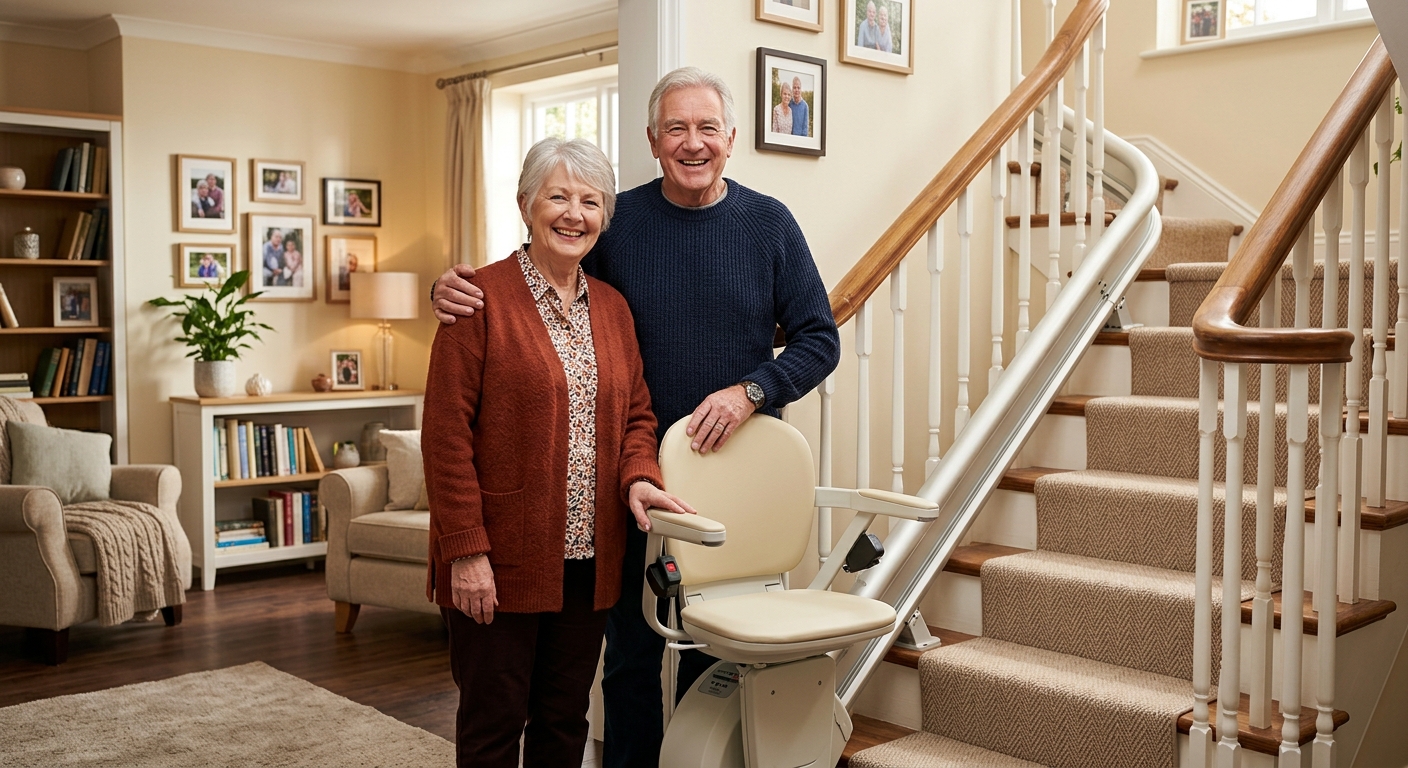
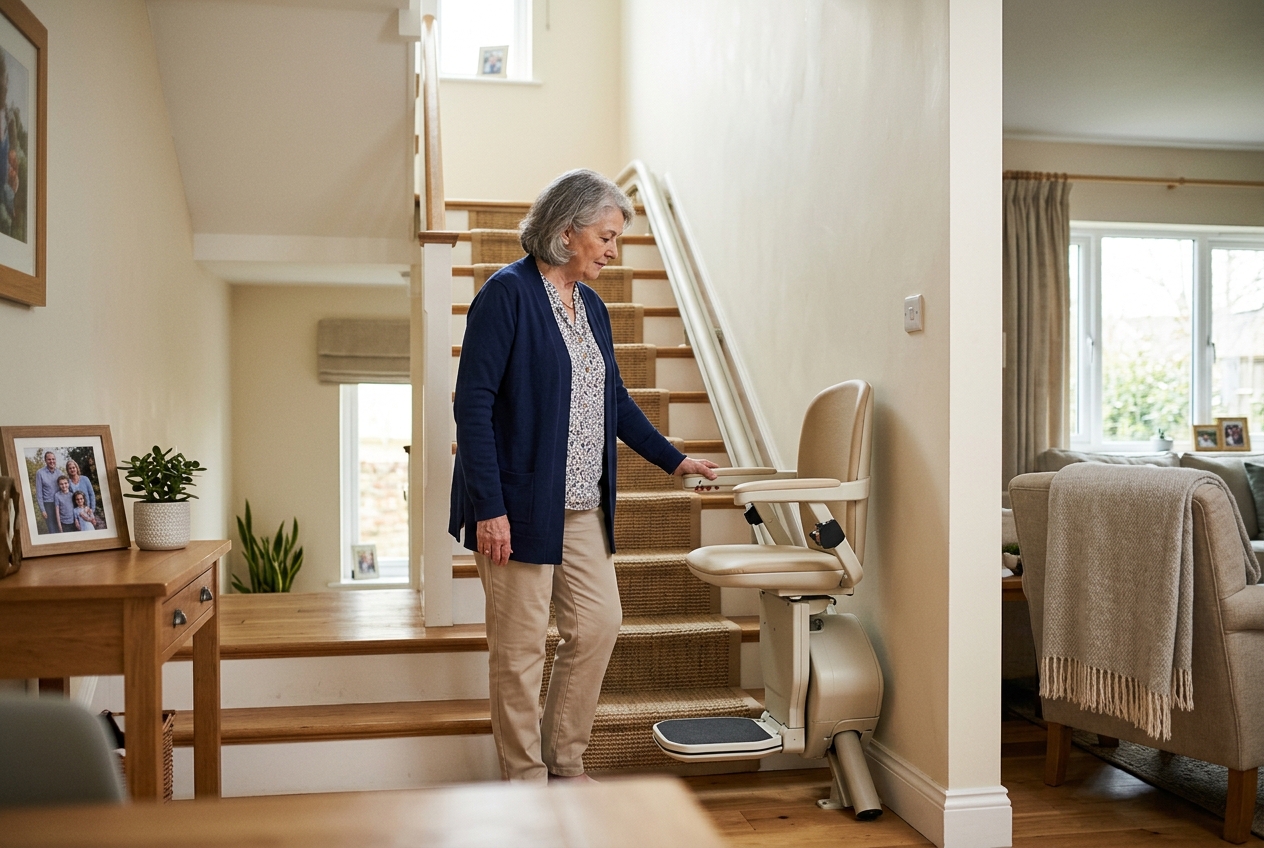
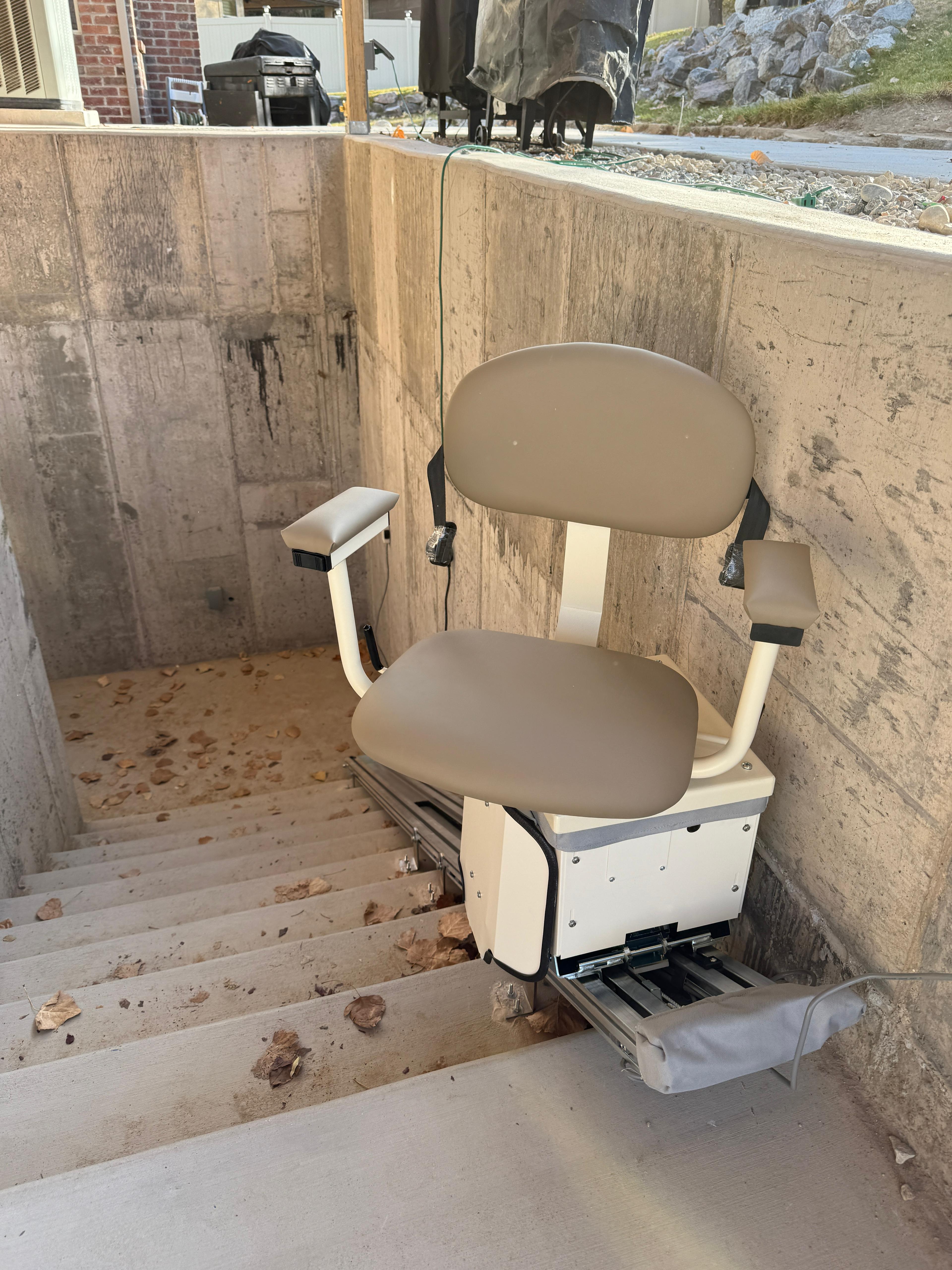
A stairlift is a motorized chair that rides along a rail mounted to your existing staircase, carrying you up and down without the strain of climbing. Straight stairlifts handle up to 350 pounds. Curved stairlifts, built for staircases with turns or landings, handle 275 pounds standard, with an upgrade option to 350 pounds. For any staircase used several times a day, a stairlift often solves the problem faster, and for less money, than a remodel.
A home elevator moves you and your equipment between floors without using stairs at all. Newer shaftless and pneumatic models fit into smaller footprints than older designs and can often be added without major construction. Home elevators make the most sense in multi-level homes where a stairlift will not cover every trip, such as groceries, laundry, and a wheelchair, all in one ride.
A vertical platform lift (VPL), a chair-sized platform that rises straight up or along a short ramp, solves a different problem: getting past a porch, a deck, or a short run of outdoor steps without a long ramp. VPLs are common at Utah ramblers built with a raised entry and no room for a full-length ramp.
A wheelchair ramp gives step-free access without any powered equipment, which some families prefer outright. The tradeoff is space: a code-compliant ramp needs roughly a foot of length for every inch of rise. Western Stairlifts backs its ramp systems with a lifetime warranty, so a ramp installed today is still covered years from now.
A residential dumbwaiter is a small elevator for things, not people, moving groceries, laundry, or firewood between floors without a trip up and down the stairs. It will not replace a stairlift or an elevator, but it removes a lot of the daily lifting and carrying that leads to strain and, sometimes, a fall.
The Utah and Idaho reality
Utah and Idaho homes come with their own accessibility challenges. Ramblers built from the 1970s through the 1990s are everywhere in Salt Lake City suburbs like Sandy, Murray, and Bountiful, and most of them have a two-step entry from the garage or driveway, just enough of a rise to be a real obstacle, not enough to justify a full elevator. We handle a steady stream of Salt Lake City stairlift installation requests for exactly this reason.
Snow and ice make the outdoor half of this checklist non-negotiable here. A ramp with the wrong slope becomes dangerous the first time it ices over, and a threshold without a covered landing turns into a skating rink every winter. We size ramps and outdoor stairlifts for Utah's actual snow load and freeze-thaw cycles, not a generic national spec.
Idaho's senior population is one of the fastest-growing in the country, and Boise stairlift installation is among our most requested Idaho services as more families there plan ahead. We see the same multi-level layouts behind our Meridian stairlift installation work, and further east in Idaho Falls stairlift installation projects, where families are managing the same two-story ramblers and split levels.
Western Stairlifts has been installing Utah stairlifts and broader accessibility solutions statewide and throughout Idaho for over two decades. Our technicians know these house styles because we have been working on them the whole time.
When to DIY and when to call a pro
Some aging-in-place remodel projects are simple enough to do yourself over a weekend: a grab bar kit anchored into a stud, a nightlight timer, non-slip strips in the tub. If you are comfortable with basic tools and the change does not involve electrical or structural work, go ahead.
Anything that touches your staircase, your entry, or your bathroom's plumbing is worth a professional in-home assessment first. A stairlift needs a rail custom-fit to your exact staircase. A ramp needs the correct slope and a landing that meets code; guess wrong, and you have built a hazard instead of a fix. Grab bars mounted into drywall instead of a stud will pull loose exactly when someone leans on them hardest.
Most aging-at-home projects benefit from at least one professional opinion, even if you do some of the work yourself. A free in-home evaluation costs nothing and tells you which changes actually matter for your specific home, instead of guessing from a general checklist like this one.
Common mistakes to avoid
A few mistakes show up again and again in homes we visit after something has already gone wrong.
- Grab bars mounted into drywall alone. They need to reach a wall stud or a mounting plate, or they will fail under real weight.
- Ramps are built steeper than code allows. A ramp that looks fine to the eye can still violate standard slope guidelines, and a steep ramp is genuinely more dangerous than the two steps it replaced.
- Fixing the bathroom and ignoring the bedroom. The walk from bed to bathroom at 2 a.m., in the dark, half asleep, is one of the most common places we hear about a fall happening.
- Waiting until after a fall to make any changes. Every family we talk to wishes they had started sooner. None of them wish they had waited longer.
- Buying equipment before a proper measurement. A stairlift or ramp ordered without an accurate site visit often does not fit, costing time and money to correct.
Next steps
You do not need to tackle every item on this list this month. Start with whichever room worries you most, the stairs you use every day, the shower you are already cautious in, and work outward from there.
If you want a second set of eyes, our team offers a free in-home evaluation across Utah and Idaho. We will walk through your home, point out what actually needs attention, and give you honest options, no pressure to buy anything on the spot.
Frequently asked questions
- How much do aging-in-place modifications cost? Costs vary widely by project. A grab bar or a nightlight timer might cost under $50. A stairlift typically runs a few thousand dollars installed, and a full bathroom remodel with a walk-in shower can run much higher. A free in-home evaluation gives you real numbers for your specific home instead of a generic range.
- What should I fix first in my home? Start with whatever you use every day and worry about most, usually the stairs or the bathroom. Falls are most common in exactly those two rooms, so they tend to offer the biggest safety return for the money spent.
- Does Medicare or insurance cover aging-in-place modifications? Original Medicare generally does not cover home modifications like ramps, stairlifts, or grab bars. Some Medicare Advantage plans, VA benefits, Medicaid home and community-based services waivers, or your local Area Agency on Aging may help with part of the cost, so it is worth checking your specific plan before you budget.
- Is a stairlift a good option for aging in place? Yes. A stairlift is one of the most cost-effective aging-in-place solutions for anyone who uses a staircase daily. Straight stairlifts handle up to 350 pounds, and a free in-home evaluation confirms whether it fits your staircase. Curved stairlifts handle 275 pounds standard, with an upgrade option to 350 pounds for staircases with turns or landings. A free in-home evaluation tells you whether your specific staircase is a fit.
- How long does it take to make a home ready for aging in place? Small fixes, grab bars, lighting, and rugs can happen in a weekend. Equipment like a stairlift or ramp typically takes a few weeks from evaluation to installation. Full bathroom remodels take longer. Most families phase the work over several months rather than doing everything at once.
- What is the correct slope for a wheelchair ramp? Most codes call for 1 inch of rise for every 12 inches of ramp length, a 1:12 ratio. For residential use, especially in Utah and Idaho where ice is a factor, a gentler slope is often safer than the minimum code allows.